
Finding Your Groove DNA

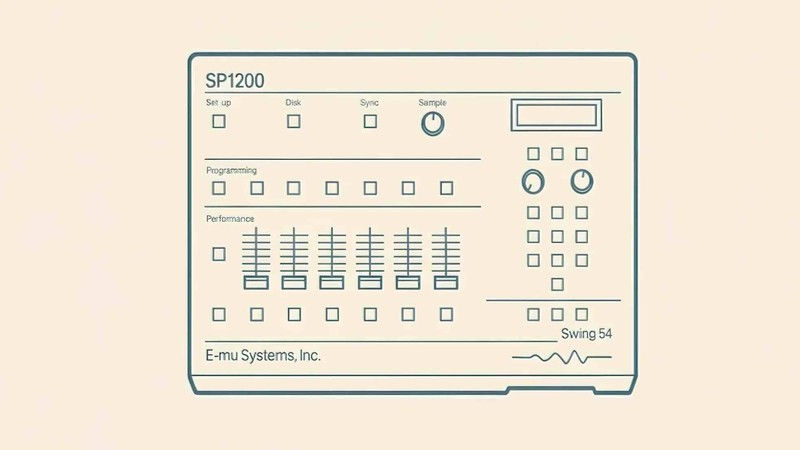
Exploring the SP1200 16 Swing 54 groove from Samples From Mars – where machine timing meets human feel.
Some grooves just fit. One I keep coming back to is SP1200 16 Swing 54 from the Samples From Mars groove collection.
When I drop it onto a riff, the whole thing starts to dance around the kick – vibrant, alive, breathing.
It’s not just timing; it’s personality.
I sometimes wonder whether that feel is something I’ve absorbed from years of house music or whether it’s built into my DNA.
There’s something right about it – as if that particular swing knows where I live.
What a Groove Template Does
For newcomers: a groove template in a DAW lets you apply the timing and swing feel of a classic machine to any MIDI or audio clip.
It shifts the rhythm slightly off the grid, adding that subtle imperfection that makes programmed patterns feel played.
The Samples From Mars collection captures these timing fingerprints from machines like the SP1200, MPC, TR-808, and others – giving you the human touch of vintage gear inside a modern workflow.
The Conversation Between Groove and Riff
When the groove is right, you don’t need layers or fillers.
It already feels complete.
The space between notes speaks as clearly as the notes themselves.
I think that’s what control really is in production – not volume or density, but the ability to own the space.
The riff has to be musically correct, of course.
The simplest way is to use question-and-answer phrasing – one phrase asks, the next resolves.
When that conversation happens inside a tight rhythmic framework, it becomes self-sustaining.
You can strip everything else away, and it still feels whole.
When Machines Feel Human
That’s what’s always fascinated me about the SP1200 and similar machines – their groove templates aren’t mathematically perfect, but they feel perfect.
Artists like J Dilla, Daft Punk, and Moodymann built entire worlds of rhythm around that loose, human-machine handshake.
Maybe that’s the real goal: not to make something tight, but something alive.
Try It Yourself
Try dragging this groove (or other grooves) onto one of your own clips.
Or experiment with different swing percentages – 54%, 57%, 60% – and see how the feel transforms.
Even subtle changes can make a world of difference.
Sometimes, that’s all it takes to make a loop breathe.


Comments