
The Bass Bump: Why Tape, Pultecs and Filters Make Bass Feel Bigger

Updated: Aug 7

Some low end just feels right.
Bigger without becoming boomy.
Heavier without becoming muddy.
More solid without sounding louder.
Tape machines, Pultecs and even resonant filters can all create that same feeling.
They do it in different ways.
But they all arrive at a similar result.
Engineers know that sound as the bass bump.
It's a small, broad lift in the low end that shows up in a handful of very different tools – tape emulation, a Pultec EQ, or even a resonant filter with a touch of Q.
What It Actually Is
The bass bump is a gentle, wide rise in the low frequencies – usually somewhere between 30 and 120Hz depending on the tool – often paired with a small dip just above it.
That pairing is the whole trick.
The bump adds weight.
The dip cleans up the mud that would normally come with adding weight.
So you get more size and more clarity at the same time.
That's why it feels different from just reaching for an EQ and boosting 60Hz.
A flat boost gives you more of everything down there – including the boom.
The bass bump gives you the good part and quietly pulls back the part you didn't want.
The Pultec Made It Famous
The most famous version is the Pultec low-end trick.
You boost and attenuate the same low band at once. Boost 30Hz, then cut 30Hz.
On paper that should cancel out.
It doesn't.
Here’s the frequency response of a UADx Pultec EQP-1A with both the 30 Hz Boost and Attenuation controls set to 4.
The boost and the cut on a Pultec aren't mirror images.
The boost curve is broader and sits lower.
The cut is a little narrower and lands slightly higher.
So when you use both together, they don't meet in the middle – they leave a bump in the deep low end and carve a dip above it.
Big bottom. Clean low mids. That's the Pultec sound.
Bob Power turned it into a technique – running it into a dbx 160 on a parallel channel for the huge low end on A Tribe Called Quest records.
It caught on. Dave Pensado carried it forward, and mixers like Jaycen Joshua still use it today.
It's simply the way the boost and attenuation curves interact when they're used together.
Engineers discovered it, and it stuck.
Tape Does It By Accident
Tape gets to the same place from a completely different direction.
When Steven Slate talks about the bass bump on his tape emulator, he's talking about something real that analogue machines do – the head bump.
It comes from physics, not design.
It isn't an EQ curve somebody dialled in.
It's simply how the playback head responds to very long wavelengths.


As the recorded wavelength on the tape gets close to the physical length of the playback head's pole pieces, the playback head naturally produces a small rise in the low-frequency response.

A little rise appears – and, like the Pultec, a gentle dip higher up.
Where the bump lands depends on tape speed.
Typically around 50–60Hz at 15 ips.
Typically around 100–120Hz at 30 ips.
Slow the machine down and the bump drops deeper. Speed it up and it tightens and moves out of the way.
So you can pick the speed by the source.
If something needs weight – drums, bass, a track that wants to feel bigger – drop to 15 ips and let the bump sit right where the weight lives.
If you want the low end tight and out of the way, 30 ips pulls the bump up and lightens the whole bottom.
Same plugin. Two different jobs, depending on what the track is asking for.
This is often baked into tape plugins.
Slate's VTM even gives you a bass alignment control to move and shape it, exactly like aligning the low end on a real machine.

In Softube Tape, slowing the speed and leaning on the head bump does the same job, and the Type B machine is built around that creamy, weighted bottom.
Same result as the Pultec.
Weight down low, a little space just above.
The Filter Does It Too
Dave Pensado was the one who made me pay attention to the Q on a filter, not just the cutoff.
Put a high-pass filter on something and add a touch of resonance – a little Q – right at the cutoff.
That resonance creates a small peak sitting right where the filter starts to roll off.
So as you’re cutting away the rumble below, you’re gently lifting the frequency just above the cut.
We're not talking about self-oscillation or obvious resonance – just enough Q to gently emphasise the cutoff point.

The result is surprisingly familiar.
You reduce the unnecessary low end while adding a little weight back where the instrument actually lives.
It isn't the same mechanism as a Pultec or a tape machine, but it's solving exactly the same problem: making the bottom end feel bigger without making it muddier.

Add a gentle cut in the low mids and you move even closer to the balance that tape and a Pultec naturally produce.
Alternatively, a low-pass filter with a hint of Q leaves a small lift right before it rolls off the top – a subtle highlight on the last bit of air you're keeping, just as you tidy everything above it.
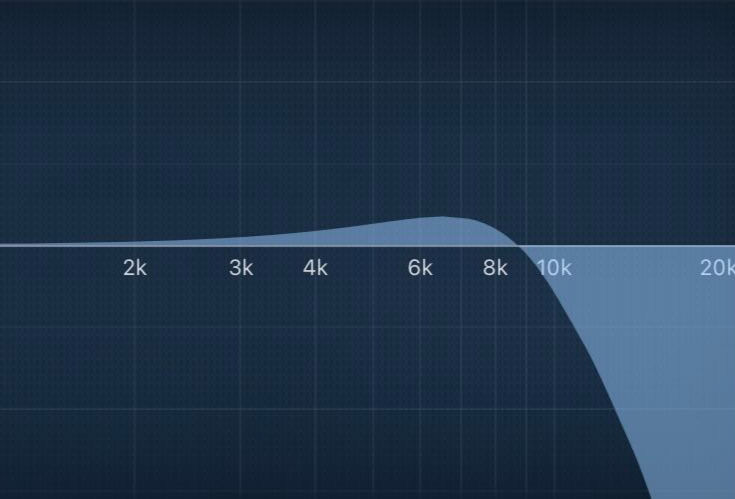
A little Q, and it slightly highlights the top element you're cleaning up.
Same idea, opposite end of the spectrum.
Some plugins are built almost entirely around this idea.

Boz Digital's Bark of Dog is a resonant high-pass with a boost just above the cut – it even has a Pultec-style mode built in.

Little Labs' Voice of God does the same job aimed straight at sub weight.
Why It Keeps Working
Three completely different technologies.
One mixing problem.
Tape machines revealed the effect by accident.
The Pultec gave engineers a way to recreate it deliberately.
Today, resonant filters and dedicated plugins continue the same idea in different ways.
Different mechanisms.
Same goal: more weight where it helps, less mud where it hurts.
A word of warning, because it’s easy to overdo: a little goes a long way down here.
Stack three of these across a chain – tape, then a Pultec, then a resonant filter – and you’ll have too much of a good thing fast.
Pick one. Let it do its job.
The bump isn’t loud. That’s the point.
You don’t hear it when it’s there.
You hear it when it’s gone.


Comments