
The Bell EQ Trick: A More Musical Alternative to High- and Low-Pass Filters

Updated: Jul 22

High- and low-pass filters are everywhere in modern mixing. They’re quick, they’re tidy, and they’re often the first thing we reach for.
But they’re not always the most musical choice.
One technique I’ve come back to over the years – and one associated with engineers like Mick Guzauski – is using wide bell EQs on the top and bottom instead of filters.
Not as a rule. As an option.
Where this idea comes from
In interviews and long-form mix breakdowns, Mick consistently talks about preserving the integrity of a sound rather than cleaning by default. He’s cautious with anything that removes information too decisively, and that includes aggressive high- and low-pass filtering on musical sources.
If you look at his sessions, you don’t see filters stacked everywhere. Low end is controlled by balance and tone. Top end is shaped without that tilted, hyped feel. Broad, gentle EQ moves come up again and again.
Steep filters create abrupt phase shifts at the cutoff, which can subtly flatten a soundstage.
He’s also spoken about being sensitive to phase changes and how subtle EQ decisions affect the feel of a mix, not just the frequency response. Filters – especially when used across lots of channels – can quietly change that feel. Wide bell curves tend to do less of that.
That mindset made me start reaching for wide bells in spots where I’d usually grab a filter.

Why high- and low-pass filters can be heavy-handed
Filters are decisive. Once you set them, everything beyond that point is gone.
That’s fine for:
Cleaning noise
Removing rumble
Tightening badly recorded material
But on musical sources, they can:
Thin things out too quickly
Shift the balance in a way that feels “processed”
Affect phase and tone more than you realise
Especially when they’re stacked across lots of channels.
The bell EQ alternative
Instead of cutting everything below or above a point, try this:
Use a wide bell
Make a small cut
Target the area causing the issue, not the entire range
You’re shaping tone, not enforcing a boundary.
Practical examples
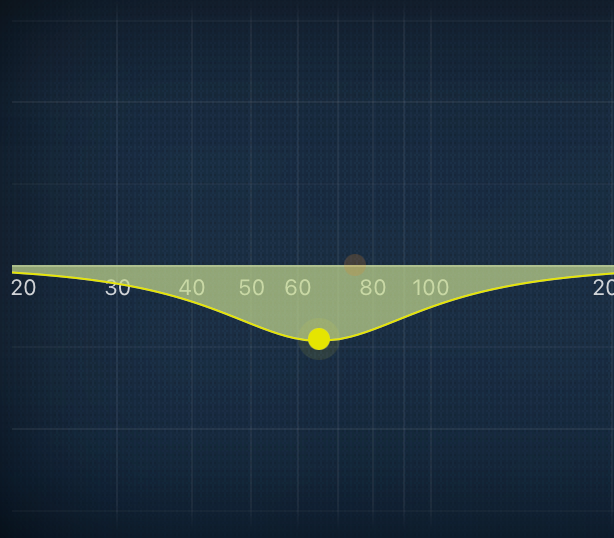
Low end: bell instead of high-pass
Rather than a steep high-pass at 80 Hz:
Try a wide bell cut around 60–120 Hz
Keep it subtle
Let the true low end breathe
This keeps weight and movement while reducing muddiness.

High end: bell instead of low-pass
Instead of low-passing the top:
Use a wide bell around 8–14 kHz
Gently tame harshness or excess brightness
Preserve air without dulling the sound
This is especially useful on vocals, synths, and buses.
Why this often sounds more “musical”
Wide bells:
Have a centre of gravity
Rise and fall naturally
Interact more gently with compressors
Wide bell curves also tend to introduce gentler phase shifts than steep filters. In practice, that often means depth, punch, and stereo image feel more natural – especially once compression and summing come into play.
Filters don’t taper – they remove.
That difference adds up over a whole mix.
When filters are still the right tool
This isn’t anti-filter.
Use high- and low-pass filters when:
There’s clear noise or rumble
You need strict separation
You’re solving a technical problem
Use bells when:
The problem is tonal
The part already sounds good
You want control without sterilising the sound
Closing thought
Mixing isn’t about rules – it’s about intent.
Sometimes the goal isn’t to remove frequencies, but to nudge the balance into place. Wide bell EQs give you that option, and once you hear it, it’s hard to unhear.
Next time you reach for a filter, try a bell first. You might keep more of the music than you expect.


Comments