
Types of Reverb Explained: Choosing Space, Depth, and Perspective

Updated: Aug 7

Reverb is one of those things most of us use for years before we really understand it. I certainly did.
I spent a long time working with hardware reverbs, adding them by feel, without fully knowing what was actually going on under the hood – or why certain spaces worked better than others.
Over time, what became clear is that reverb isn’t something you sprinkle on sounds – it’s the space the track lives in.
Every reverb choice shapes perspective. It answers questions like:
Where does this sound sit?
How close does it feel?
How much air is around it?
Does it belong to the same world as everything else?
This isn’t about rules or signal chains.
It’s about choosing a space that supports the feeling of the track.
Type | Character | Typical decay | Best for |
Room | Short, intimate, realistic | 0.2–0.8 s | Drums, vocals that need to belong somewhere |
Plate | Bright, dense, no early reflections | 1–3 s | Vocals, snares — depth without distance |
Chamber | Warm, focused, characterful | 1–2.5 s | Vocals, strings, anything that needs body |
Hall | Long, diffuse, three-dimensional | 1.8–4 s | Orchestral, ballads, ambient pads |
Spring | Boingy, metallic, lo-fi | 0.5–2 s | Guitars, dub, vintage character |
Shimmer | Pitched, ethereal, evolving | 4 s+ | Pads, atmospheres, transitions |
Algorithmic | Tweakable, predictable, clean | Any | Mix glue, sound design, control |
Convolution | Captured from real spaces | Matches IR | Realism, post-production, scoring |
Reverb as Placement, Not Effect
Presets can sound convincing in isolation, but they don’t always hold up once the rest of the mix arrives.
Something that felt perfect on its own can suddenly feel wrong when everything else comes in.
Does everything feel connected?
Does a sound need depth without being pushed back?
Should something feel distant, or simply supported?
Is the space meant to feel real, abstract, or somewhere in between?
Different reverbs answer different questions.
The decision isn’t really which plugin – it’s where this sound is meant to live in the picture.
Room Reverb: When a Track Needs to Belong Somewhere
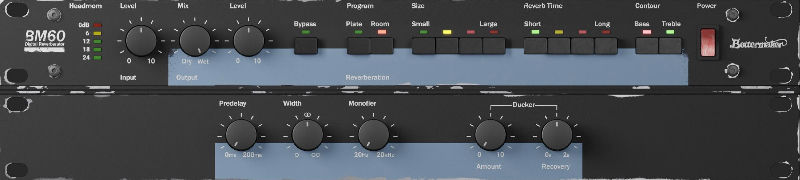
I reach for room reverb when a mix feels like its elements were created in isolation.
Room reverbs don’t draw attention to themselves.
They work quietly, mostly through early reflections, giving the ear a sense that everything is happening in the same environment.
They’re less about tails, and more about belonging.
Why I reach for room reverb
To glue elements together
To give dry sounds a shared context
To create cohesion without obvious ambience
To place sounds just in front of the listener
If a mix feels disconnected or overly dry, a subtle room reverb is often the fix.
I tend to think of it as an invisible space surrounding the mix.
Where it tends to work best
Drums and percussion
Short synths and stabs
Background elements that feel exposed
When it’s right, you don’t really hear it – you just feel the track settle.
Plate Reverb: Depth Without Distance

Plate reverb is what I reach for when something needs depth, but I still want it to feel present – suspended, rather than pushed back.
Unlike rooms or halls, a plate doesn’t suggest a physical space.
There’s no clear sense of size or distance.
Instead, you get a smooth, even density that wraps around a sound without moving it away from you.
That’s why plates feel supportive rather than spatial.
Why I reach for plate reverb
To add depth without creating distance
To smooth and thicken elements
To help sounds sit without losing focus
Plate reverbs are often the safest choice when something feels too dry, but you don’t want it pushed into the background.
Where it tends to work best
Vocals
Snares and claps
Lead synths
Any element that needs presence with support
Hall Reverb: Distance, Scale, and Perspective

Hall reverb solves a very specific problem: placing something further away.
Adding a hall isn’t just adding reverb – it’s changing perspective. It moves a sound back into the scene, giving it space to breathe, but also separating it from the listener.
That can be powerful, or it can be destructive.
Why I reach for hall reverb
To create scale and size
To push elements back intentionally
To give sustained sounds a sense of distance
Hall reverbs are less subtle by nature. They’re about perspective and depth, not glue.
Where it tends to work best
Pads and long textures
Ambient elements
Breakdowns and transitions
Moments where space is part of the emotion
If something suddenly feels far away or detached, a hall reverb is often why.
Chamber Reverb: Focused Space With Character
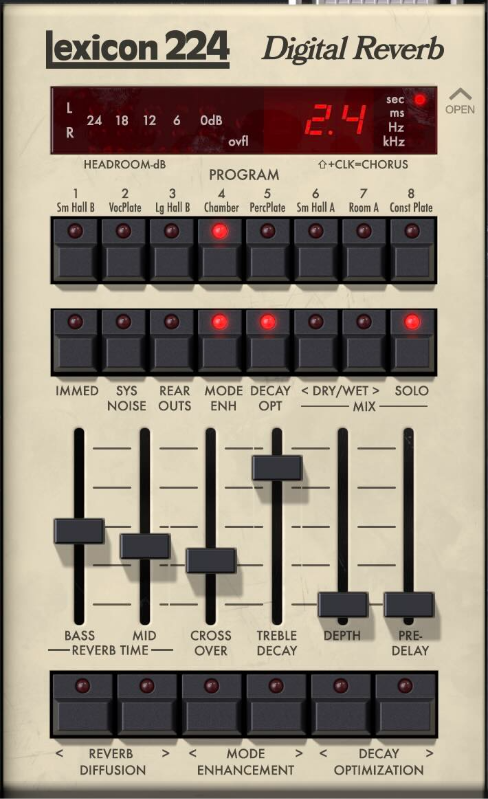
Chamber reverb sits somewhere between rooms and halls, but it behaves differently to both.
I reach for chamber reverb when I want depth and character without the scale or wash of a hall. It suggests a space, but a contained one – something reflective, intimate and controlled.
Chambers tend to have a sense of shape. You feel the walls.
Why I reach for chamber reverb
To add depth with more focus than a hall
To introduce character without obvious size
To give elements a sense of enclosure and presence
Chambers can feel slightly darker or denser than rooms, and less expansive than halls. That makes them useful when something needs space, but still needs to stay connected to the listener.
Where it tends to work best
Vocals that need depth without distance
Lead synths and melodic parts
Percussion that wants character rather than realism
Shimmer Reverb: Atmosphere Rather Than Placement

Shimmer isn’t really about placing sounds in a physical space.
I reach for shimmer when I’m shaping atmosphere rather than depth – when the goal is emotional context, not realism.
Shimmer behaves more like an extension of the harmony than a room. It floats above the mix, creating height, air, and a sense of distance that’s more emotional than spatial.
Why I reach for shimmer
To add a sense of height or lift
To create atmosphere rather than location
To suggest distance without pushing elements back
Used subtly, shimmer can make a track feel suspended.
Used heavily, it becomes part of the texture itself.
Where it tends to work best
Pads and sustained sounds
Background atmospheres
Breakdowns and transitions
Moments where space becomes part of the emotion
Shimmer works best when it’s felt more than heard.
Spring Reverb: Character Over Space

Spring reverb adds movement and friction.
A metallic shimmer.
It came from a practical problem: guitar amps in the 1960s needed reverb in a box, and a coiled spring was what fit.
That mechanical origin shapes how it still sounds.
When should you use spring reverb?
I rarely reach for spring.
I've used it over the years and I respect what it does, but it never became part of the sound I wanted.
Spring gives the sound character, not space.
When I want character I add saturation, or a filter movement, or push a Slap Delay.
When a track wants that drip and bounce, nothing else covers it like a Spring. A guitar that sits too clean. A dub vocal. A snare that needs to sound roughed up. Those are the moments I would think about one.
What does spring reverb sound best on?
- Electric guitars, where it grew up
- Dub and reggae, where the drip carries the genre
- Vocals that need texture
- Snares and percussion when you want vintage feel without a real room
Algorithmic Reverb: Control and Intentional Space

Algorithmic reverb is often my first choice in modern, busy mixes.
Not because it’s more realistic – but because it’s designed to behave.
Algorithmic reverbs are shaped to avoid the unpredictable build-ups and resonances that real spaces introduce.
They’re easier to control, easier to automate, and easier to fit around dense arrangements.
Why I reach for algorithmic reverb
To keep space controlled and predictable
To avoid frequency build-up
To shape depth without realism getting in the way
This is often why algorithmic reverbs feel like they “just work”, especially in electronic music.
Where it tends to work best
Dense mixes
Rhythmic material
Sound design
Situations where clarity matters
Convolution Reverb: When Reality Matters

Convolution reverb is what I reach for when realism is the point.
Because it’s based on impulse responses, convolution reverb recreates the behaviour of real rooms or hardware. The space feels believable – sometimes uncannily so.
The trade-off is flexibility.
Why I reach for convolution reverb
To place sounds in real environments
To recreate specific rooms or spaces
To add believable, natural depth
Convolution reverbs sound great to me on first listen.
In a mix they often go sterile.
I can't speak for every convolution plugin, but I've heard it enough times to be wary.
Where it tends to work best
Cinematic work
Environmental placement
Subtle background depth
Hardware recreations
Choosing Reverb by Feel
Stripped right back, the choices look like this:
Cohesion and glue → Room
Depth without distance → Plate
Scale and perspective → Hall
Focused depth and character → Chamber
Atmosphere and lift → Shimmer
Control and clarity → Algorithmic
Believable reality → Convolution
At a certain point, these choices stop feeling technical.
You’re no longer adding reverb – you’re shaping the space the listener experiences.
Reverb Is the Space In-Between
Most reverb problems aren’t about too much or too little.
They come from unclear intent.
Reverb shapes distance, perspective, and atmosphere.
It’s part of the space between the sounds – just as important as silence, just as important as timing.
When that space feels right, the music doesn’t just play.
It floats.


Comments